
Osmanthus Moon / HCCH Studio
HCCH Studio has unveiled the Osmanthus Moon, a temporary public art installation that transforms a city park into a celestial recreation. The pavilion serves as a bridge between modern projection techniques and traditional Chinese folk art.
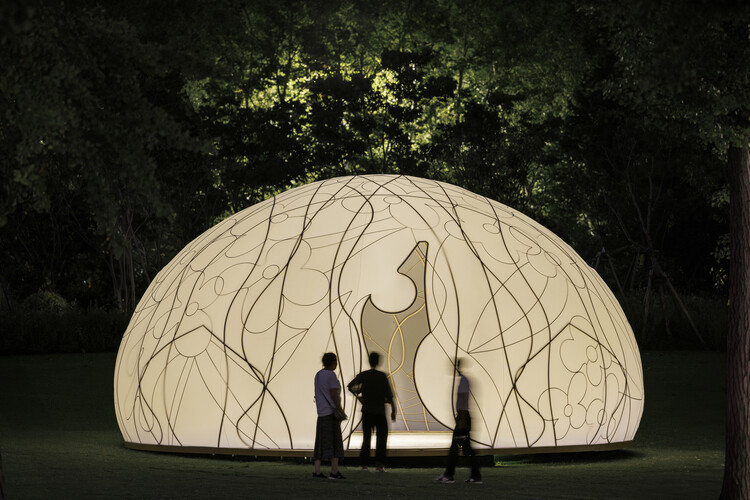
A Celestial Architectural Concept
The Osmanthus Moon is a short-term public art installation located in a park in Shanghai, China [1]. Designed by HCCH Studio, the project takes the form of a translucent illuminating dome that effectively transforms the surrounding urban environment into a glowing recreation of the moon [1].
The structure is intended to be a physical and metaphorical projection of the osmanthus pattern [1]. This specific flora is deeply ingrained in Chinese culture, representing a signature plant and flavor associated with the autumn season [1].
Integration of Cultural Heritage
The pavilion is not merely a visual spectacle but a tribute to the traditional Mid-Autumn Festival [1]. By using a luminous dome, the installation creates a space that invites the public to engage with seasonal customs in a contemporary setting [1][2].
A central element of the design is the dialogue established with "Zao Hua," also known as "stove flower" art [1]. This folk painting tradition is recognized as an intangible cultural heritage, and its aesthetic influence is integrated into the installation's conceptual framework [1].
Technical Execution and Purpose
Completed in 2025, the Osmanthus Moon functions as a temporary public art piece [2]. The use of a translucent material allows the dome to emit a soft, pervasive light, simulating a lunar presence on earth [1].
The installation serves as a bridge between the ephemeral nature of a festival and the permanence of cultural memory [1]. By combining a modern architectural pavilion with ancient folk motifs, HCCH Studio highlights the continuity of tradition within a rapidly evolving urban landscape [1][2].